Delos partners with Opera Lafayette and OperaCréole to present the world premiere recording of the earliest complete opera by a Black American. The discovery of Edmond Dédé’s unedited manuscript of Morgiane (1887) inspired a rescue mission across time that would eventually realize the composer’s long-held ambition. Now, more than a century after its completion, Morgiane is finally able to be heard in its entirety thanks to the tireless work of OperaCréole founder Givonna Joseph, Opera Lafayette conductor Patrick Dupre Quigley, and countless others along the way. Born a free Creole of color in New Orleans, Dédé fled an Apartheid-like existence for free people of color in the southern United States to build his career in France, a move that would exert great influence on his composing style. To that end, Morgiane is not only beautiful, but also a bridge between worlds: American and French, Black and white, the powerful and the marginalized. This sweeping four-act epic set in Arabia and Persia is the work of a composer who labored with conviction and brilliance, even as he feared no one would ever hear his music. Featuring a cast of international soloists, OperaCréole’s chorus, and the Opera Lafayette Orchestra performing on period instruments from Dédé’s time, this live recording is not a revival – it is a revelation.
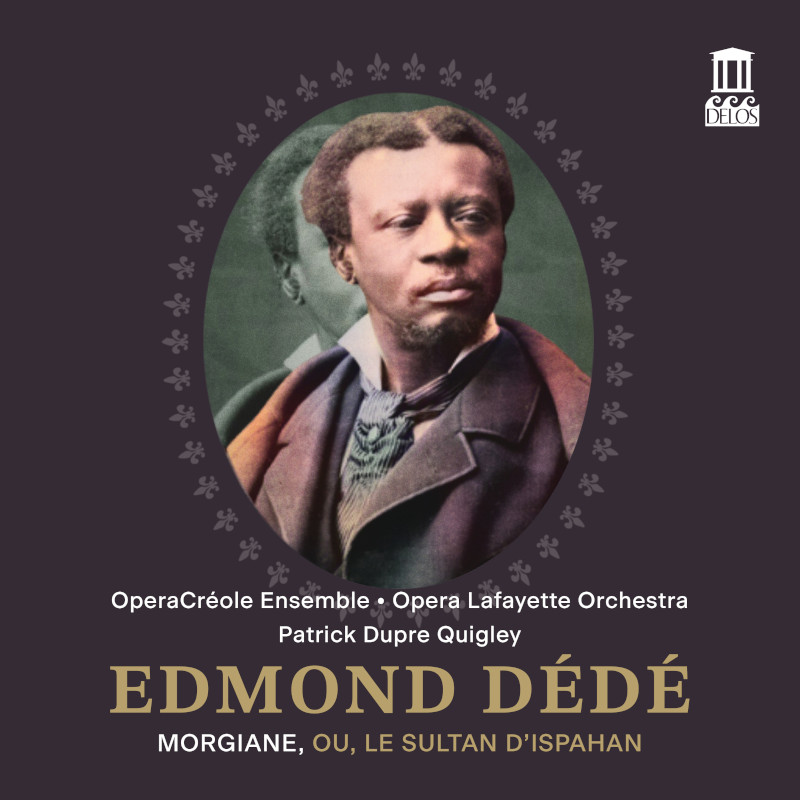
Edmond Dédé (1827-1901)
Morgiane, ou, Le sultan d’Ispahan
Mary Elizabeth Williams, soprano (Morgiane)
Kenneth Kellogg, bass (Kourouschah)
Nicole Cabell, soprano (Amine)
Joshua Conyers, baritone (Hagi Hassan)
Chauncey Packer, tenor (Ali)
Jonathan Woody, bass-baritone (Beher)
OperaCréole Ensemble
Opera Lafayette Orchestra
Patrick Dupre Quigley, conductor
Givonna Joseph, creative collaborator
Release Date: 30 January, 2026 DE3628, Delos
“Completing ‘Morgiane’ in 1887 was an act of artistic defiance. Its performance more than a century later confronts the silences of history – and restores to Dédé the place he was once denied. This opera matters, not only because it is beautiful, but because it rewrites the story of who shaped the operatic canon. ‘Morgiane’ bridges worlds: American and French, Black and white, powerful and marginalized. It is the work of a composer who labored with conviction and brilliance, even as he feared no one might ever hear his music. This recording fulfills a hope Dédé carried all his life, night after night conducting opera from the pit: that one day, his own work would find an audience. That day has arrived.“ Givonna Joseph & Patrick Dupre Quigley
ABOUT OPERA LAFAYETTE
Opera Lafayette brings period-instrument opera from the 17th through 19th centuries to life. Since its founding in Washington, DC in 1995, it’s been dedicated to sharing the beauty, relevance, and historical importance of opera with modern audiences. By uncovering and performing lost and little-known works, it aims to enrich the cultural landscape with first-rate opera that might otherwise be lost to future generations. From the stage of Versailles to venues both prestigious and unique in New York, Washington, DC, and beyond, Opera Lafayette stages intimate, transcendent productions that invite everyone into a realm of vivid, daring imagination. Opera Lafayette’s innovative take on opera stands at the intersection of the established canon and neglected treasures, with singers, instrumentalists, and dancers as the storytellers. The result is truly memorable: a journey that is distinctly Opera Lafayette.
ABOUT OPERACRÉOLE
The award-winning nonprofit OperaCréole, founded in 2011 by the mother-and-daughter team of Givonna Joseph and Aria Mason, is dedicated to researching and performing lost or rarely performed works by composers of African descent. The company focuses on works by free 19th-century New Orleans composers of color and also promotes Louisiana’s Creole language and culture.
The word Créole means “native to the place;” and, in keeping with the spirit of the word, OperaCréole’s singers are professional artists, educators, and international soloists with roots in New Orleans, America’s “First City of Opera!” (The first opera performed in what is now the United States took place in New Orleans in 1796.)
OperaCréole’s groundbreaking work, including the 2017 production of Lucien Lambert’s lost opera La Flamenca (1903), has been acknowledged nationally by NPR (National Public Radio), The New Yorker, and the AfriClassical Blog. In 2017, its founders were named among the Southerners of the Year by Southern Living, and OperaCréole has received numerous awards for contributions to the operatic sphere.
ABOUT PATRICK DUPRE QUIGLEY
Patrick Dupre Quigley is the current Artistic Director of Opera Lafayette and Co-Founder and Artistic Director of Seraphic Fire. He is known for his engaging performances of historically-informed programming that draw in new audiences and delight regular concertgoers. A ceaseless advocate for a more inclusive concert experience, Quigley’s programs regularly span more than 1000 years of musical history. Guest conducting invitations have come from The Cleveland Orchestra, Grand Rapids Symphony, Indianapolis Symphony Orchestra, New World Symphony, Philharmonia Baroque Orchestra, San Francisco Symphony and the Utah Symphony.
“A Manuscript That Unlocks a Forgotten Black Composerʼs World.” The New York Times
“Dédé’s “Morgiane” shows how diversity initiatives can promote works of real cultural value.” The New Yorker
“After 138 years, a Black composer’s magnum opus finds a stage.” NPR
“Edmond Dédé’s ‘Morgiane’ is as musically rich as it is historically significant. This opera has plenty to captivate; Morgiane should be here to stay.” The Observer
“This is our cultural patrimony that we lost because of a terrible time in our history. […] We must listen to this because if we don’t, we are not having a dialogue with our (American) culture.” Patrick Dupre Quigley for CNN
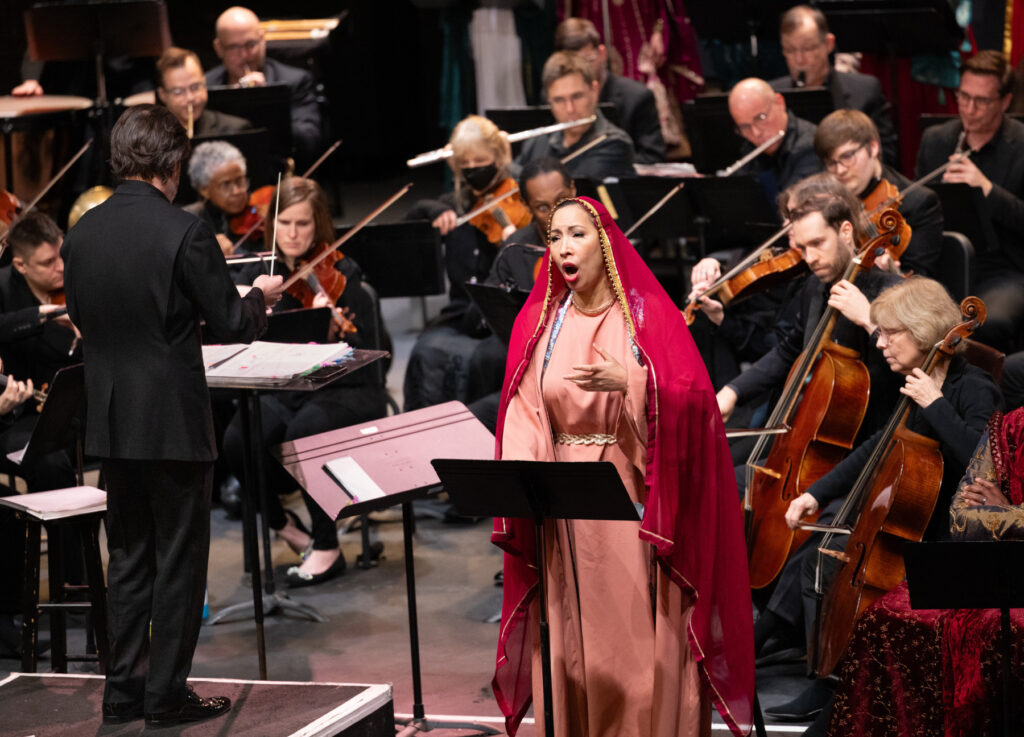
Top image: OperaCréole Ensemble
All photos by Jennifer Packard