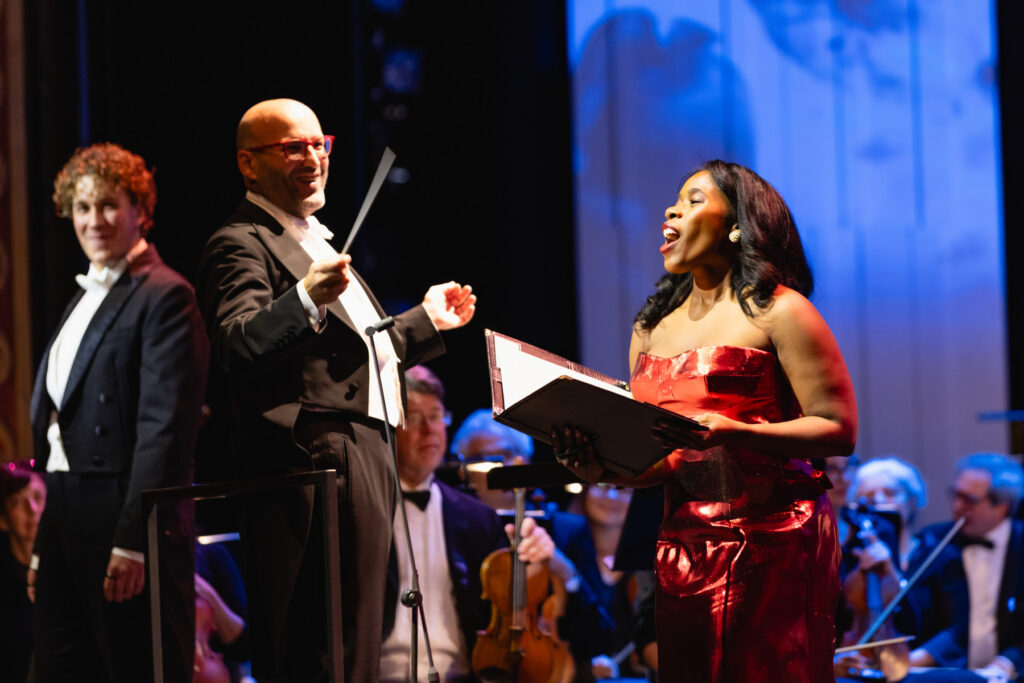
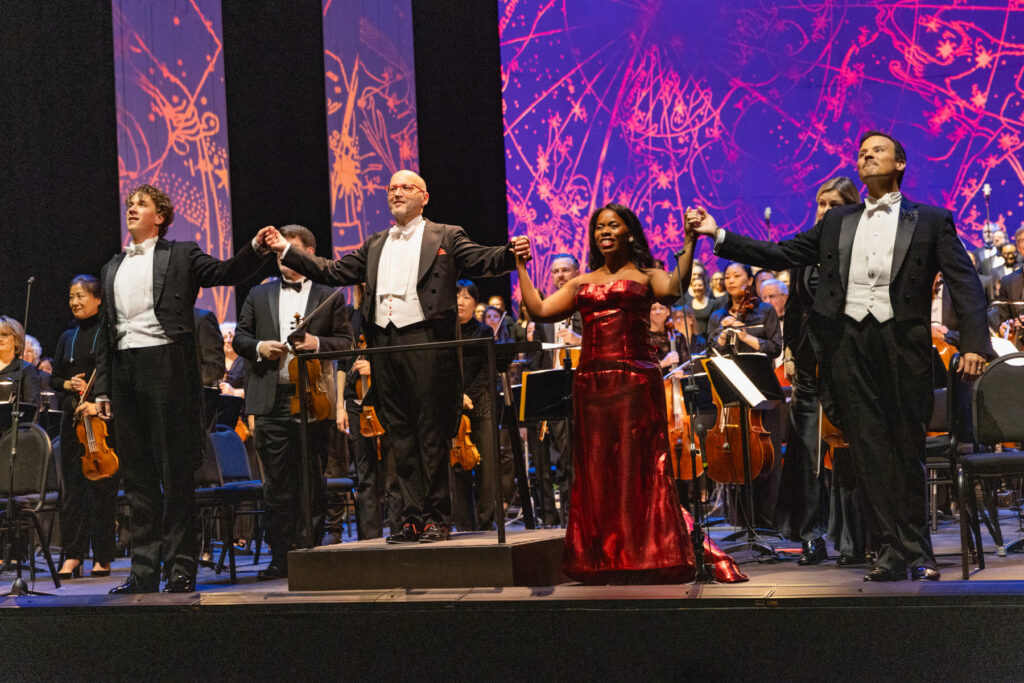
Lyric Opera of Chicago recently programmed several performances of Carl Orff’s secular cantata Carmina Burana as part of its fall roster. The soloists were Jasmine Habersham, soprano, David Portillo, tenor, and Ian Rucker, baritone. Enrique Mazzola, music director, conducted the Lyric Opera Orchestra. The Lyric Opera Chorus and Uniting Voices Chicago were prepared respectively by Michael Black and Josephine Lee. The lighting designer was Sarah Riffle and the projection designer was Adam Larsen, the latter making his debut at Lyric Opera of Chicago. Given the accomplishments of both the present soloists and the assembled choral forces, it was wise for Lyric Opera to schedule these performances at this time.
During each of the twenty-four musical numbers in Orff’s score this production uses varying images projected onto the stage behind the chorus. The images alternate according to the moods of the individual number, some suggesting a pastoral love, others the behaviors of excess such as drinking. The repetition of “O Fortuna” as a theme in the opening and closing numbers for chorus is appropriately illustrated with the wheel of fortune, the theme of changeable fate so typical in collections of medieval poetry. The chorus sang here with precision while matching the undulating volumes of the orchestra. In this frame of Orff’s work the chorus commented here with, for the most part, practiced diction on aspects of secular involvement: wealth and power contrasted here vividly with poverty, as the chorus lamented the “vulnera” (“wounds”) of Fortune.
The first several solo numbers are performed by the baritone. Mr. Rucker’s approach to this score is impeccable. His interpretations are individual and, at once, respectful of the composition. As the lover in Spring who defends his faithfulness Rucker draws on his rich baritone with a well-supported extension into the tenor range. His top pitches are natural, not forced, an aspect which adds to his vocal color. In this first song Rucker describes the lover’s devotion through delicate piano phrases, again touching on gracefully produced high pitches. His emphasis on “quisquis” (“whoever”) links the lover’s plight to the previous choral statements on fate. In the next baritone solo, the first number in the section entitled In Taberna, Rucker uses controlled yet racing emphases to suggest the anger and frustration of his character. The image of a ship without a steersman is captured by the volatility expressed here in vocal surges.
Immediately following the second baritone solo the only number for tenor is performed, the song of the roasted swan. The piece is performed by Mr. Portillo with true bravura. His description of the once living swan begins on a secure top note, followed by equally expressive even higher notes. While the male chorus sings repeats of “Miser,” Portillo’s swan prepares in a wrenching lament to be put on the spit and later onto the serving plate. The subsequent number for baritone, “The drunken abbot,” is also shared at its close with male chorus. Rucker’s portrayal of the abbot in this brief piece emphasizes a repeated phrase, “Ego sum abbas,” with a skillful variation in each of the phrases in sequence.
The first soprano number, in the final segment of the work entitled The Court of Love, establishes the female voice commenting on the effects of Cupid’s darts. Ms. Habersham presents the sadness of the young woman lacking a lover by tracing a seamless vocal line with spare decoration. In her later solo numbers before the final choral parts Habersham displays her vocal agility at decoration while embellishing her line to match the textual import.
Based on the interaction of soloists and chorus in these performances, Lyric Opera is to be commended for featuring this significant work.
Salvatore Calomino
Carmina Burana
Composed by Carl Orff
Text from Carmina Burana edited by Johann Andreas Schmeller (1847)
Click here for the production program.
Top image: Enrique Mazzola, Lyric Opera Chorus and Orchestra