Christmas comes to Versailles, and the magnificent Chapelle Royale, courtesy of Le Poème Harmonique and Vincent Dumestre, one of the finest conductors of Baroque music around. There was even a Lighting Designer (“mise en lumières”), Julien Lubek, offering various shadings and highlighting to the experience.
The programme had been rather mobile – a duration of one hour 15 minutes stretched to one hour 45, and an extra piece was added to that on the web. Stranger still, the one player not credited was the solo organist (the continuo organist, Lucie Chabard, was given though): so welcome Jean-Luc Ho, previously organist of Sant-Germain-des-Prés from 2006 to 2016.
It was a solo organ that launched the evening, too: one of the Leipzig Chorale Preludes, Nun komm der Heiden Heiland, BWV 659. The music just started, filling the air with Bach’s slowly unfolding masterpiece. Given the vast acoustic (“chapel” is a bit of a misnomer), the bass was nicely defined. Ho decided, laudably, not to over-emphasise the chorale line, allowing us to hear the linear movement around the chorale. He also kept he pulse intact throughout, allowing the music to flow beautifully.
Space was used well: from above, the strains of Alleluia by Erhard Bodenschatz (possibly known, if at all these days, for his collections Florilegium Portense I and Floilegii Musicii Portensis II these days. Choir, organ and brass came together for a bright experience that only darkened around at the words, “Omnis terra”. The performance, given the space and distances involved, was remarkably together.
Good to hear the recently rediscovered masterpiece, Bach’s Chaconne in G-Minor, allocated the number BWV 1179. It had only been unveiled, by Ton Koopman, in the modern era on November 17, 2025, at St Thomas’ Church, Leipzig. The piece is unmistakably Bach, with much stylus phantasticus involved. By a combination of masterful technique and careful selection of stops, Ho brought the piece to life in vivid technicolour.
From one end of the Bach-Werke-Verzeichnis to the other. The first couple of hundred numbers are cantatas: This was No. 63 (which is therefore BWV 63), Chisten, ätzet diesen Tag (Christians, engrave his day). Composed for the first day of Christmas, it exudes the same sort of bright celebration that characterises the first cantata of the Weihnachtsoratorium. BWV 623 is perfect for this venue. The soloists were exceptional, counter-tenor William Shelton fine in recitative (shining, literally in a spotlight), Hugo Hymas a well-projected tenor. The reedy bassoon of Isaure Lavergne was real highlight, as was the soprano and bass (here baritone) duet with oboe obligato, “Gott, du hast es wohl geflüget,” and baritone Victor Sicard’s authoritative and dramatic recitative, “Verdoppelt eich demnach,” preparatory to the final balancing chorus (which brings back material form the first), “Höchster, schau’ in Gnaden an”.
Just as Bodenschatz was known for his collections, so was Gottfried Vopelius (1645-1715), this time his Gesangbuch. Although he is also known as the editor of an edition of Bach’s chorale Keinen hat Got verlassen, BWV 369, Vopelius’s own Ein Kindelin so löbelich uses text that has been handled by so many great composers, from Praetorius though Scheidt to Telemann. Vopelius revels in the text, offering a real opening out from the opening’s restful organ counterpoint.
Finally, Bach’s great Magnificat, BWV 243a (so, in E flat). First performed in Leipzig in 1723, just after Bach had taken up the position of cantor at St Thomas’ Church there, is heard here in its original version (he D-Major is more familiar). The Bachian blaze of light we heard earlier recurred here in the opening chorus “Magnificat anima mea Dominum” (and how the sopranos articulated their semiquavers). All credit to the trumpets, too: this is high and agile (Adrien Mabire, Jean Bollinger, and Arnaud Bretecher). Soprano Perrine Devillers excelled in “Et exultavit”, joined up front by the excellent oboe obligato of Gabriel Pidoux. Sicard acquitted himself well in the “Quia fecit,” while Hymas negotiated the florid lines of “Deposuit potentes” creditably.
Soloists were finely chosen, with both sopranos, Devillers and Charlotte La Thrope, possessing instruments of both clarion beauty and agility. The chorus played a huge part in the drama of this Magnificat, not least in the rapid-fire “Omnes generationes” – thrilling, while the fugue “Sicut locutus est” was beautifully delineated and almost dancing, with the chordal coming together at “Abraham et semine eius” a real moment of arrival.
How to end? The breadth and grandeur of the chorale, BWV 323, Gott sei uns gnädig (1725 or before, but not published until 1787), offered a moment of deep contemplation.
All credit to Vincent Dumestre for creating such a cogent, deeply spiritual experience, and for managing the acoustics superbly.
Colin Clarke
Bach Nun komm der Heiden Heiland, BWV 659. Chaconne in G-minor, BWV 1179. Cantata, BWV 63, Christen, ätzet diesen Tag. Magnificat, BWV 243a. Gott sei uns gnädig, BWV 323. Bodenschatz Alleluia. Vopelius Ein kindelein so löbelich.
Charlotte La Thrope, Perrine Devillers (soprano); William Shelton (countertenor); Hugo Hymas (tenor); Victor Sicard (baritone); Le Poème Harmonique / Vincent Dumestre; Jean-Luc Ho (organ).
Chapel Royal, Versailles, December 12, 2025.
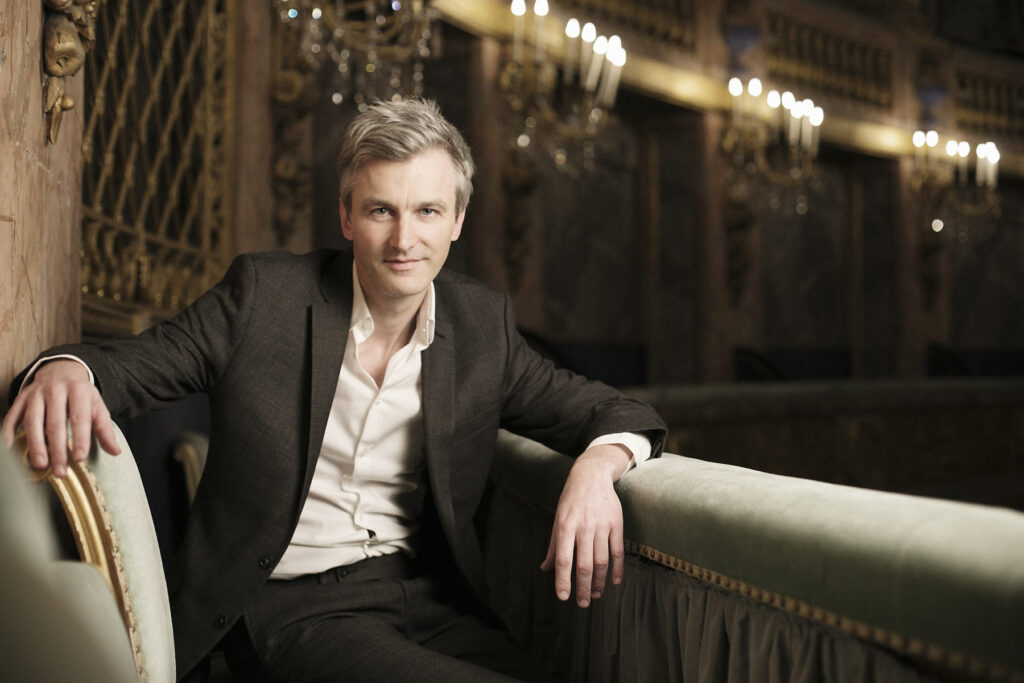
Top image © Yuhao Pan