Samuel Barber’s first opera, Vanessa, premiered at the Metropolitan Opera in 1958 – when serialist abstraction and stark realism dominated the world of modern opera. Many critics immediately dismissed it as old-fashioned Romanticism, disparaging both Barber’s conservative musical language and the Gothic libretto penned by his life partner, Gian Carlo Menotti.
Recently, however, the opera has won a solid spot in the canon, with notable performances at Glyndebourne, Washington, Frankfurt, and Los Angeles. Andris Nelsons and the Boston Symphony Orchestra took up the piece last week, in a concert performance co-organized by the Boston Lyric Opera.
Recent revivals have moved listeners beyond the initial impressions of listeners in the 1950s. Vanessa need not engage listeners today because the story is romantic or modern, or because the music is avant-garde or backward-looking. Rather, it can appeal because both libretto and score constitute sophisticated mid-century efforts to balance these conflicting impulses in a sophisticated manner distinctive to the librettist and composer.
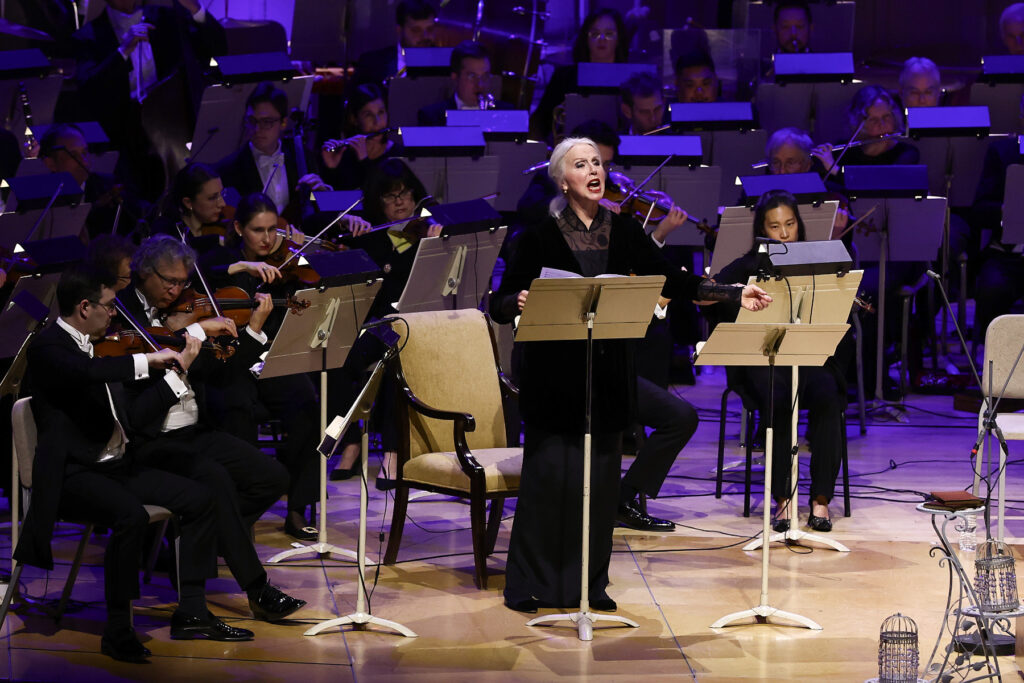
The libretto concerns three generations of women stuck in an isolated mansion, each haunted by the illusion that love can freeze time. Aging but still beautiful Vanessa waits for the return of a long-lost lover. Her young niece Erika longs for a romantic partner to sweep her away forever with undying passion. Vanessa’s sternly practical mother (the “Old Baroness”) counsels rigid propriety.
When a rakish young man named Anatol appears from nowhere, each woman attempts to impose her preferred vision of love on him. In the end, Vanessa betrays her ideals, marries Anatol, and accepts his preferred life of fancy hatboxes, insincere kisses, and a mansion in Paris. Erika, having spent a night with Anatol and rejected his marriage proposal, secretly aborts his child and is left behind alone.
Characters consumed by delusions may strike audiences as a confusing and artificial operatic protagonists. Yet this is precisely Menotti’s intention. Moving forward in life requires renouncing the ideal of love for what is real, immediate, and available. At the moment of composition, Barber and Menotti were learning this very lesson as their own intimate relationship frayed.
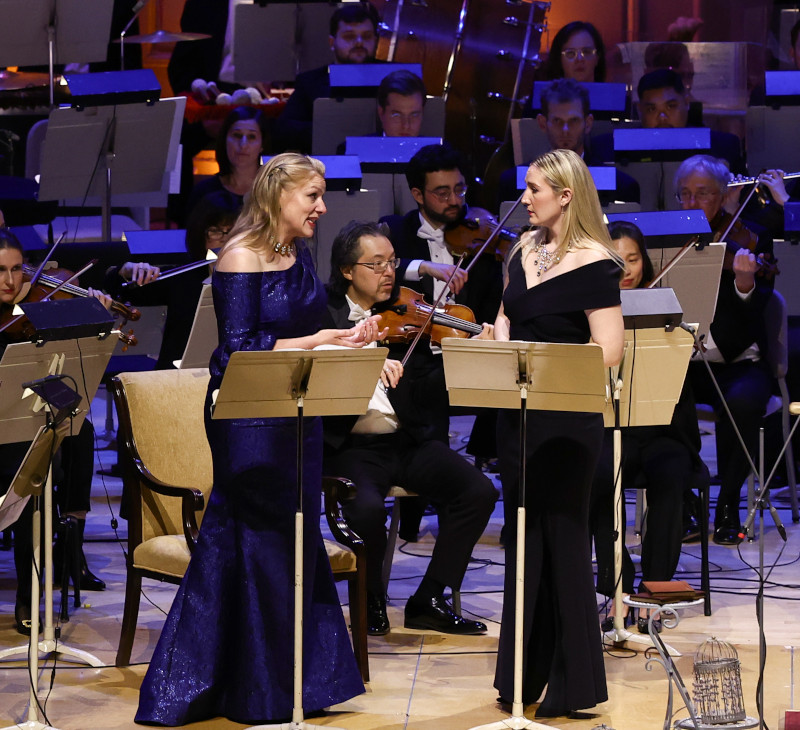
Yet this harshly realistic (even modernist) message is delivered in a way that elicits deep sympathy for the emotional pathos suffered by those faced with such a choice. Though Vanessa gets what she wants – or believes she wants – the audience is left with the haunting feeling of having witnessed a tragedy. In this complex tension between subjective feeling and objective reality, Vanessa resembles the plays of Strindberg, Ibsen, and Chekhov, on which the opera was clearly modeled.
The same balance of romantic and modern is reflected in the score. Barber was a lifelong opera devotee who always knew he wanted to write for the lyric stage and spent a quarter century systematically studying all the techniques necessary to do so. No surprise, then, that the score (especially Act I) is filled with musical gestures drawn not just from Puccini and Strauss, as musicologists remind us, but from Wagner, Tchaikovsky, Verdi, Mozart, Borodin, and many other composers.
Yet this eclecticism proves superficial. Just as the libretto’s characters must work through Romantic illusions to find their true selves, Barber’s score works through the operatic conventions of the past century to find a distinctive style. At first, he balances set-pieces based on inherited tropes with harsher, less tonal passages. By the final act, the singers float against minimal orchestration, uttering passages of spare recitativo accompagnato more indebted to Debussy or Berg than Strauss, but unmistakably that of Barber.
For performers, Vanessa’s stylistic ambiguities and tensions pose challenges. This opera demands more than beautiful singing alone. Genuine singing actors must bring to life the words uttered by peculiar and sometimes ridiculous characters – and do so in an unfamiliar musical language.
Samantha Hankey was most successful in meeting this challenge. A young mezzo-soprano raised near Boston, her meteoric rise to the top of the opera world has focused on Strauss and Mozart, so naturally she brought extraordinary diction, focused vocal emission, and subtle timbral variation to the role. Her dramatic yet direct performance brilliantly captured the honesty and humanity that make Erika the opera’s most accessible character.
Soprano Jennifer Holloway possesses a dramatic voice of considerable beauty and power – and she surely looks the part of Vanessa. I would welcome a chance to hear her in the dramatic Wagner and Strauss roles toward which she has recently transitioned. Yet, in a human-scale and text-driven role like Vanessa, her broad vibrato, unclear diction, and lack of attention to Barber’s distinctive verbal cadences and stresses blunted her impact.
At the end of a magnificent career, Mezzo Anne Sophie von Otter lacks the vocal power she once possessed – but sang the Old Baroness with just the cold precision and sovereign disdain the character demands.
Thomas Hampson, originally scheduled to sing the Old Doctor, would have brought true star power to the role. He was replaced at the last minute by Patrick Carfizzi, a veteran of 25 years and 450 performances at the Met. Carfizzi gave a master class in memorably even, stylish, and characterful comprimario singing.
The impact of Vanessa hinges on the character of Anatol more than is often realized. His charm sets the plot in motion; his opportunistic flexibility dictates its conclusion. Here again, the originally scheduled singer, Pavel Černoch, withdrew and was replaced by Ganson Salmon, whose underpowered voice and charmless delivery all but vitiated the role, obscuring the motivations of the female characters.
That leaves Andris Nelsons and the BSO. The orchestra played with exceptional technical brilliance under clear direction. They were at their best in purely orchestral passages, such as the celebrated intermezzo and the opening and closing of some scenes. Elsewhere, however, they sounded less like an opera pit orchestra than the symphony orchestra they normally are. A broad, thick, and loud sound often obscured delicate vocal and orchestral details, a tendency that editors of recent recordings (including the BSO’s radio broadcast of the second night) counteract.
Nelsons and the BSO nonetheless deserve praise for giving audiences a chance to reassess a major work and, more generally, for continuing their commitment to luxury-cast performances of challenging operatic repertoire, even when casting changes and acoustic challenges complicate particular performances.
Andrew Moravcsik
Vanessa
Composer: Samuel Barber
Libretto: Gian Carlo Menotti
Cast and Production Staff:
Jennifer Holloway (Vanessa), Samantha Hankey (Erika), Anne Sofie von Otter (The Old Baroness), Ganson Salmon (Anatol), Patrick Carfizzi (The Old Doctor), Wei Wu (Major Domo/Footman).
Boston Symphony Orchestra, Andris Nelsons, Conductor. Tanglewood Festival Chorus, Betsy Burleigh, Guest Conductor. Boston Lyric Opera Chorus, Brett Hodgdon, Conductor.
Symphony Hall, Boston, 8 January 2026
Top image: Andris Nelsons conducts the BSO and cast of Vanessa
All photos by Winslow Townson