Reaching the end of his remarkable cycle of Lully operas (in recordings, with performances also usually presented alongside them) Christophe Rousset comes almost to the beginning of that body of work, with Cadmus et Hermione (1673). It wasn’t Lully’s first work for the stage, but it was his first full-scale opera or tragédie lyrique, a form which he effectively pioneered in France, setting the course for the development of opera in that country – ‘tragedy’ here meaning serious, if not necessarily connoting an unhappy ending. (As it was performed in London in 1686, it influenced the musical and theatrical culture of the later Restoration period too.) There would be some refinements in the sequence of works he composed up until his death in 1687, such as the elimination of comic elements drawn from Venetian opera (the figure of the Nurse (La Nourrice) in drag), in parallel with the Arcadian reforms in the Italian context that led to the evolution of opera seria.
The use of classical myth to glorify royal power in a music drama became established, set to music that shifts organically between flowing recitative and more lyrical solo vocal declamations which follow the natural contours of the French language rather than with florid melismas, with choruses and dances interspersed but integrated into the narrative. The Prologue – as usual, not directly connected with the subsequent drama – sets the heroic tone with the defeat of the monster Python by the sun’s scorching rays, an allegory of Louis XIV as the Sun King. That action pre-empts the challenges which Cadmus must overcome in the drama proper, in order to be reunited with his beloved Hermione, when Envy appears and blocks his path.
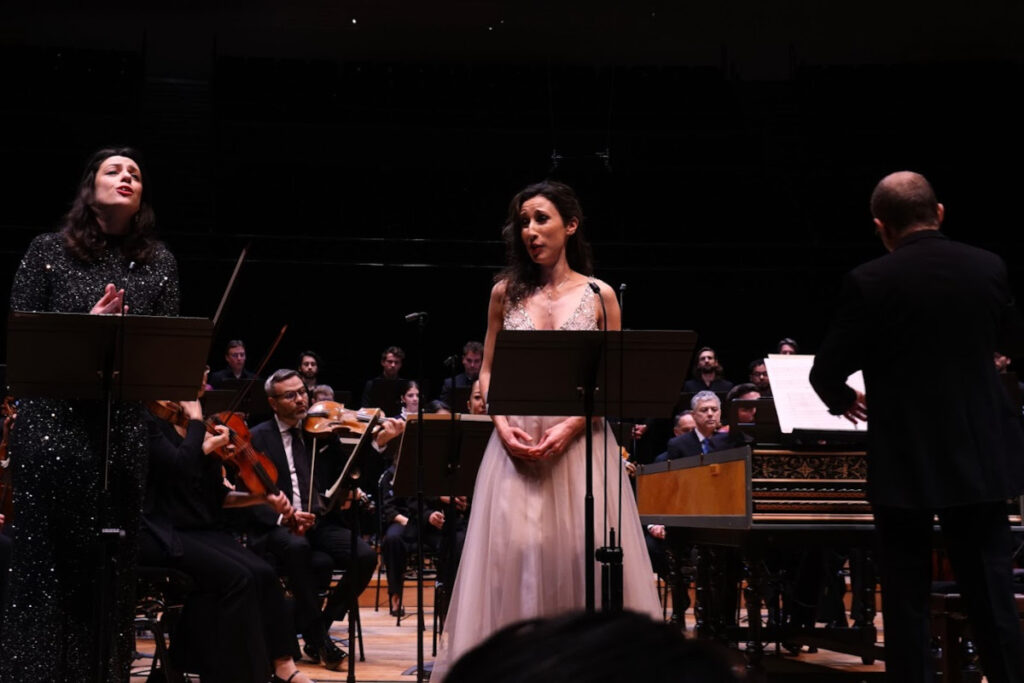
In this concert performance, Rousset held the music in a careful equilibrium, more as the edifying courtly divertissement it was intended to be than a graphic depiction of the work’s dramatic events. The strings of Les Talens Lyriques more or less replicated Les Vingt-quatre Violons du Roi in number and type of instrument, not grounded by the deeper sound of bigger violones or double basses, ensuring a pliant, silken veneer to their sound and lending the dances poised, light rhythms. More incident on stage by the singers might have helped to clarify the narrative, as also occasionally some more contrasting attack by the instrumentalists, for example for the ‘subterranean noise’ that accompanies the appearance of Envy. The contribution of the two lutenists in the continuo ensemble could have been more unanimous and decisive, but supple performances from flautists, oboists, and the solo trumpeter certainly offered variety in timbre. The choir also provided an elegant additional tonal layer, as translucent as the orchestra with their handful of young trebles.
The two title parts play a surprisingly small role in the drama itself, amidst the side plots among other characters of warring gods or capricious mortals. The captive Hermione’s part is slighter than Cadmus’s, but Eléonore Pancrazi ensured that her music stood out, starting with a solemn inwardness, developing into a more heart-rending lament in Act Two, where plaintive tones and upward whelps depicted her sorrow. Jérôme Boutillier confronted Cadmus’s ordeals with more objective and implacable rigour.
Among the plethora of other roles, prominent contributions came from Bastien Rimondi, as a vividly characterised, niggling Envy and the lusty old Nurse; Lysandre Châlon with a fluid, and sometimes comical facility in the low bass range, both as Pan and in the slapstick part of Arbas, the latter making amorous overtures to Marie Lys’s coquettish Charité; and William Shelton in a crisp but colourful interpretation of L’Amour, redolent of Philippe Jaroussky’s singing, in whose academy he has participated. Mathilde Ortscheidt gave distinctive performances as Pallas and Mélisse on account of her incisive, contralto-like tone.
Overall, this was a rendition of refinement and subtlety, not yielding to fleeting effects or show, but sustaining an engaging pace through the opera with no long pauses between the Acts. A CD release is forthcoming from studio sessions just before this performance. In the meantime, Rousset will appear in the UK this summer with Les Talens Lyriques and an prominent international solo cast at the Grange Festival in concert performances of Mozart’s La Clemenza di Tito.
Curtis Rogers
Cadmus et Hermione
Composer: Jean-Baptiste Lully
Libretto: Philippe Quinault
Cast and production staff:
Hermione – Eléonore Pancrazi; Cadmus – Jérôme Boutillier; Charité / Palès / Junon – Marie Lys; Pallas / Mélisse – Mathilde Ortscheidt; Aglante / Vénus – Thaïs Raï-Westphal; L’Amour – William Shelton; L’Hymen / Arcas Le Premier Africain – Abel Zamora; La Nourrice / L’Envie – Bastien Rimondi; Le Deuxième Africain – Kieran White; Premier Prince Tyrien / Le Soleil – Antonin Rondepierre; Deuxième Prince Tyrien / Échion – Philippe Estèphe; Arbas / Le Dieu Pan – Lysandre Châlon; Draco / Un Grand Sacrificateur de Mars / Jupiter – Adrien Fournaison; Le Dieu Mars – Jordann Moreau
Les Pages et les Chantres du Centre de musique baroque de Versailles; Les Talens Lyriques; Conductor – Christophe Rousset
Grande Salle Pierre Boulez, Philharmonie de Paris, France, Sunday 25 January 2026
All photos by Jean Fleuriot