Recently in Reviews
15 Apr 2014
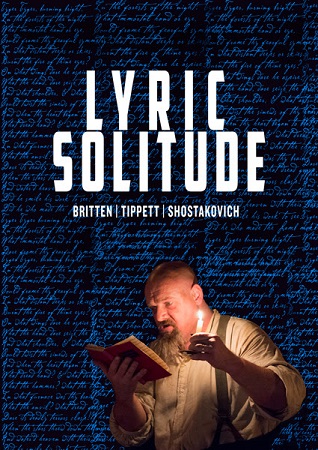
This quotation from Cervantes was displayed before the opening of the opera’s final scene:“The greatest madness a man can commit in this life is to let himself die, just like that, without anybody killing him or any other hands ending his life except those of melancholy.” »
13 Apr 2014
Gounod's Faust makes a much welcomed return to the Royal Opera House. With each new cast, the dynamic changes as the balance between singers shifts and brings out new insights. In that sense, every revival is an opportunity to revisit from new perspectives. This time Bryn Terfel sang Méphistophélès, with Joseph Calleja as Faust - stars whose allure certainly helped fill the hall to capacity. And the audience enjoyed a very good show. »
10 Apr 2014
The company ends its 2013-14 season on a high note with a staged performance of Gershwin’s theatrical masterpiece »
10 Apr 2014
Lyric Opera of Chicago’s new production of Antonin Dvorak’s Rusalka is visually impressive and fulfills all possible expectations musically with unquestioned excitement. »
10 Apr 2014
The reliable Badisches Staatstheater has assembled plenty of talent for its new Un Ballo in Maschera. »
10 Apr 2014
This varied, demanding programme indisputably marked soprano Louise Alder as a name to watch. »
09 Apr 2014
Can this be the best British opera in years? Luke Bedford’s Through His Teeth at the Royal Opera House’s Linbury Theatre is exceptional. Drop everything and go. »
08 Apr 2014
As one descends the steel steps into the cavernous bunker of Ambika P3, one seems about to enter rather insalubrious realms — just right one might imagine, then, for an opera which delves into the depths of the seedier side of celebrity life. »
01 Apr 2014
Kaiserslautern’s Pfalztheater has produced a tantalizing realization of Gluck’s Iphigénie en Aulide, characterized by intriguing staging, appealing designs, and best of all, superlative musical standards. »
30 Mar 2014
Never thought I’d say it but...... »
27 Mar 2014
Celebrating the 80th birthday of one of the UK's greatest composers (if not the greatest), this concert was an intriguing, and not always stimulating, mix. Birtwistle with Carter makes sense, but Birtwistle with Adams does not - or at least only within the remit of the concert series. The concert was actually entitled “Nash Inventions: American and British Masterworks, including an 80th Birthday Tribute to Sir Harrison Birtwistle” and was the final concert in the “Inventions” series.
»
27 Mar 2014
On Wednesday, March 19, 2014, General Director Ian Campbell of San Diego Opera announced that the company would go out of business at the end of this season. The next day the company performed their long-planned Verdi Requiem with a stellar cast including soprano Krassimira Stoyanova, mezzo-soprano Stephanie Blythe, tenor Piotr Beczala, and bass Ferruccio Furlanetto. »
21 Mar 2014
Visual elements in Richard Eyre’s striking production offset Massenet’s melodic shortcomings »
19 Mar 2014
New productions of repertoire staples such as Gioachino Rossini’s Il Barbiere di Siviglia bear much anticipation for both performers and staging. »
19 Mar 2014
On March 15, 2014, Los Angeles Opera presented Elkhanah Pulitzer’s production of the opera, which she set in 1885 when women were beginning to be recognized as persons separate from their fathers, brothers and husbands. At that time many European countries were beginning to allow women to own property, obtain higher education, and choose their husbands. »
19 Mar 2014
On March 11, 2014, San Diego Opera presented Verdi’s A Masked Ball in a traditional production by Leslie Koenig. Metropolitan Opera star tenor Piotr Beczala was Gustav III, the king of Sweden, and Krassimira Stoyanova gave an insightful portrayal of Amelia, his troubled but innocent love interest. »
19 Mar 2014
From the moment she walked, resplendent in red, onto the Wigmore Hall platform, Anne Schwanewilms radiated a captivating presence — one that kept the audience enthralled throughout this magnificent programme of Romantic song. »
19 Mar 2014
Magnificent! Following the first night of this new production of Die Frau ohne Schatten, I quipped that I could forgive an opera house anything for musical performance at this level, whether orchestral, vocal, or, in this case, both. »
12 Mar 2014
Donizetti’s opera comique La Fille du regiment returned to the Royal Opera House, Covent Garden, for its third revival. »
10 Mar 2014
With Schoenberg, I tend to take every opportunity I can — at least since my first visit to the Salzburg Festival, when understandably I chose to see Figaro over Boulez conducting Moses und Aron, though I have rued the loss ever since. »
06 Mar 2014
As the Britten centenary events draw to a close, the Birmingham Royal Ballet are offering one final highlight: a new version of Britten’s only ballet, The Prince of the Pagodas, with choreography by David Bintley. »
04 Mar 2014
Nashville Opera Artistic Director John Hoomes set the opera as Violetta’s dying dream, so colors and other aspects of the backgrounds were symbolic and bright. »
04 Mar 2014
Will wonders never cease? Wheat stalks 6 meters high? Rats 2 meters tall. Setting Donizetti’s little comedy amidst biological mutations engendered by Chernobyl does seem a bit farfetched. »
03 Mar 2014
Handel’s great opus, Rodelinda, at English National Opera on
Friday night was the latest in the Coliseum’s recent run of new and
co-produced productions, and also renowned director Peter Jones’ latest foray
into the world of opera. »
02 Mar 2014
On Sunday afternoon, February 23, 2014, San Diego Opera presented The Elixir of Love in a traditional production by Stephen Lawless. »
02 Mar 2014
Billy Budd, portrayed by handsome lyric tenor Liam Bonner, is a charismatic embodiment of innocence. »
24 Feb 2014
This was in almost every respect an excellent performance — which therefore exacerbates the problem lying at the heart, or whatever it is that lies in its place, of the work itself. »
24 Feb 2014
Bilbao is always news, Calixto Bieito is always news, Carmen with a good cast is always news. So here is the news. »
24 Feb 2014
French mistresses are much in the news these days, and now the Théâtre du Capitole’s new production of Donizetti’s La Favorite has added considerable fuel to the fire. »
22 Feb 2014
In a 1960 BBC interview, Britten explained to Lord Harewood: ‘I was very much influenced by [W.H.] Auden … »
20 Feb 2014
Michael Tippett’s opera King Priam premiered as part of the
same arts festival in Coventry for which Britten’s War Requiem was
written and in fact the two works have something in common, dealing with the
issues of war and its consequences. »
19 Feb 2014
In Lyric Opera of Chicago’s recent performances of Johann Strauss’s
Die Fledermaus several debuts are notable to both American and Chicago
audiences. »
16 Feb 2014
One wonders if it wasn’t rather risky of ENO to stage a new version of Rigoletto when Jonathan Miller’s ‘mafioso’ production, which served the company so well for a quarter of a century, is still fresh in opera-goers’ minds and hearts? »
16 Feb 2014
Its soothing wooden walls gently bathed in aquamarine light, the very modern Hall at King’s Place made a surprisingly fitting venue for a musical journey to the intimate Elizabethan chamber. »
11 Feb 2014
A handsome new production, beautifully staged in Marseille’s fine old opera house cried out for a cast to make the opera bel canto. »
09 Feb 2014
Harry Bicket and the English Concert brought Handel's wonderful late oratorio Theodora to the Barbican on Saturday 8 February 2014 after a Tour in America and now taking in Birmingham, London and Paris. »
07 Feb 2014
Opera in the British Isles might seem a rather sparse subject in the period 1875 to 1918. Notoriously described as the land without music, even the revival of the native tradition of composers did not include a strong vein of opera. »
07 Feb 2014
It is not often that a Aaron Copland's The Tender Land comes along with resources like those of the Opéra de Lyon, one of Europe's finest. So carpe diem! »
06 Feb 2014
Kasper Holten’s new production of Don Giovanni at the Royal Opera
House risks laying the house’s Director of Opera open to charges of
antiquated mores and misogyny: for he seems to suggest that the women are just
as bad, if not worse, than their seducer — and that a soulful man who seeks
genuine love is likely to find his ‘ideal beloved’ forever out of reach. »
06 Feb 2014
On January 28, San Diego Opera presented Pagliacci as the opening production of the 2014 season. Often staged along with another opera, such as Mascagni’s Cavalleria rusticana, this Pagliacci faced the opera world alone. »
05 Feb 2014
If satire is your thing you will not want to miss this opera about human testicles grafted onto a dog. »
03 Feb 2014
Every-once-in-a-while a Rusalka comes along, and this week there are even two here on the French Riviera — just now in Monaco and upcoming Saturday on movie screens all along the coast. »
31 Jan 2014
For many years, the shadow of Peter Pears hovered at the shoulder of any tenor who dared to offer their own reading of Britten’s equivocal fisherman. But, as the aural memories of Pears’ visionary dreamer soften — in the opera house, at least, if not on recordings — modern singers are increasingly released from the ghostly echoes of the past. »
30 Jan 2014
On January 25, 2014, Arizona Opera presented Candace Evans production of Puccini’s La bohème with exciting young artists Zach Borichevsky and Corinne Winters as a romantic Rodolfo and his charming but not-so-innocent Mimì. »
25 Jan 2014
Francesco Bartolomeo Conti (1681-1732) isn’t a name that trips off opera-goers’ tongues; similarly neglected is Conti’s last opera L’Issipile, despite the fact that composer (who was also a theorbo player at the Viennese Imperial Court) was the first of several opera composers to set Metastasio’s libretto. »
24 Jan 2014
Christoph Prégardien has always been a master of creative, exciting ways with Lieder. »